

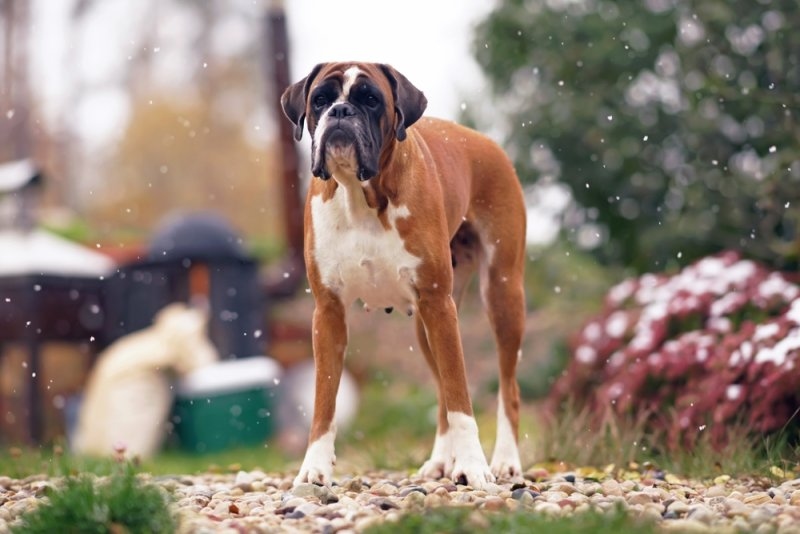
Bringing a new dog home changes everything about your daily rhythm, and Boxers change it in a big way. They walk in with energy, loyalty, and this goofy, almost clownish charm that never really fades. Before you adopt one, it helps to actually understand the boxer dog breed — what you're signing up for, not just what you're hoping for. This guide covers temperament, characteristics, training, exercise, grooming, and lifespan so there are no surprises.
Boxers trace back to Germany in the late 1800s, bred from mastiff-type hunting and guarding dogs. They started out chasing down large game, then gradually shifted into working roles and, eventually, into being the loyal companions most owners know today. Physically, they're hard to miss — muscular, square-jawed, with that alert, almost expressive face that always looks like it's about to say something.
If you had to sum up boxer dog temperament in one phrase, it'd be "puppy energy in a grown dog's body". They're playful well past the age when most breeds have mellowed out, which is exactly why people call them the clowns of the dog world. And despite that powerful, muscular build, Boxers are genuinely soft-hearted — affectionate, tuned in to their people, and quick to bond with the whole household, not just one favourite person.
Must Read: How to Treat Mold Allergies In Dogs: Practical Steps & Tips
Here's a quick snapshot of boxer dog characteristics to help you plan ahead:
| Characteristic | Details |
| Height | 21–25 inches |
| Weight | 50–80 pounds |
| Coat | Short, smooth, low-shedding |
| Lifespan | 10–12 years |
| Energy Level | High |
| Best Suited For | Active families, first-time owners with time to train |
These numbers only tell part of the story. Boxers are adaptable dogs, but their strength and energy mean they need real structure starting from puppyhood — not something you can wing.
A boxer dog's personality is really built around devotion, curiosity, and this constant pull toward staying close to their people. Here's what that actually looks like day to day.
Yes — Boxer dogs are good family dogs, full stop. They're patient, playful, and protective of the people they consider theirs. What they don't love is being left alone for long periods; they want to be part of whatever's happening in the house.
Most Boxers are wonderful with kids. They tend to tolerate rough play well and often act like a self-appointed bodyguard for younger children. That said, keep an eye on things around toddlers — a Boxer's size and sheer enthusiasm can knock a small kid over without meaning to.
They can be, as long as you're honestly ready for an active, hands-on lifestyle with consistent structure. If you're willing to put in the time for training and daily exercise, a Boxer tends to be a rewarding, manageable first dog rather than an overwhelming one.
Are Boxer dogs easy to train? Moderately — they're smart, but that intelligence comes with a stubborn streak that shows up at the worst times. Breaking training down into stages makes life easier for both of you.
Figuring out how to train a Boxer dog starts with early socialisation and basic commands like 'sit' and 'stay'. Reward-based training wins every time here — Boxers respond to praise and treats far better than to repetition or correction-heavy methods.
Getting puppies used to new people, sounds, and environments early builds confidence and heads off reactive behaviour later on. It also tends to soften a Boxer's natural wariness of strangers into something more like calm, watchful alertness instead of outright suspicion.
Boxers will test limits, especially during adolescence when independence kicks in and focus during training sessions goes out the window. Staying calm, consistent, and patient through this phase keeps you from losing ground you've already built.
Boxer dog exercise needs are high, which makes sense given the breed's athletic, working-dog roots. Meet those needs, and you get a calm, content dog indoors. Skip them, and you get chewed furniture.
Most adult Boxers need somewhere between 60 and 90 minutes of activity a day — walks, fetch, supervised time in the yard, whatever keeps them moving. Puppies need shorter, more frequent bursts instead, since their joints are still developing and can't handle prolonged strain.
Two walks a day work well for most Boxers, adding up to roughly 45 minutes to an hour combined. Splitting it into morning and evening sessions tends to manage their energy better and cuts down on restless behaviour indoors.
Physical exercise is only half the equation. Puzzle toys, obedience games, and short training drills tire out a Boxer's mind, not just its body. Combine the two, and you've got a much less bored, much less destructive dog.
Also Read: Best Rare Dog Breeds and Their Unique Traits Worth Knowing
Boxer dog care is a mix of easy grooming and staying alert to a handful of breed-specific health issues.
Boxer dog grooming barely takes any effort — that short, smooth coat rarely mats or tangles. A weekly brush and the occasional bath are really all it takes to keep skin and coat healthy.
Boxer dog lifespan generally runs 10 to 12 years, depending on genetics and how well they're cared for. The breed is prone to heart issues, hip dysplasia, and certain cancers, so regular vet screening genuinely matters here — don't skip it.
A balanced diet, routine vet visits, and avoiding extreme heat all go a long way toward a longer, more comfortable life. Boxers overheat fast because of their shorter muzzle, so summer walks need careful timing — early mornings or evenings, not the middle of a hot afternoon.
Boxers bring energy, loyalty, and no shortage of personality into any home that can keep up with them. Getting a real handle on boxer dog temperament, training needs, and exercise requirements before you adopt saves you a lot of frustration later. Put in the consistent care, grooming, and daily activity, and this breed pays you back with years of genuinely devoted companionship.
Boxers are highly energetic, playful dogs that need daily physical activity to stay balanced. Without it, that energy tends to come out as jumping, running laps around the living room, or general mischief.
Generally, yes — especially when they're socialised early and introduced to other animals gradually. They can show some dominant tendencies around same-sex dogs, so supervised introductions are worth the extra effort.
They shed moderately year-round, but nowhere near as much as double-coated breeds. A weekly brush keeps loose hair under control and your home a lot cleaner.
It can work, as long as they're getting enough daily exercise and mental stimulation. Without that outlet, their energy gets disruptive fast, so this breed suits owners near parks who are genuinely committed to the walks.
The big ones are cardiomyopathy, hip dysplasia, and certain hereditary cancers tied to the breed. Routine vet check-ups, responsible breeding, and keeping a healthy weight all cut down these risks significantly over time.
This content was created by AI